

Brief information

The Plant Biotechnology Center was established within the framework of the investment project “Creation of research laboratories for training personnel for the agro-industrial complex of the Republic of Kazakhstan” at the Non-Commercial Joint-Stock Company “Kazakh National Agrarian Research University” on January 15, 2020, in accordance with Order No. 30 dated January 16, 2020.
The Center comprises three laboratories: the “Plant Microclonal Propagation Laboratory”, the “Molecular Biology Laboratory” and the “Plant Protection and Quarantine Laboratory.”
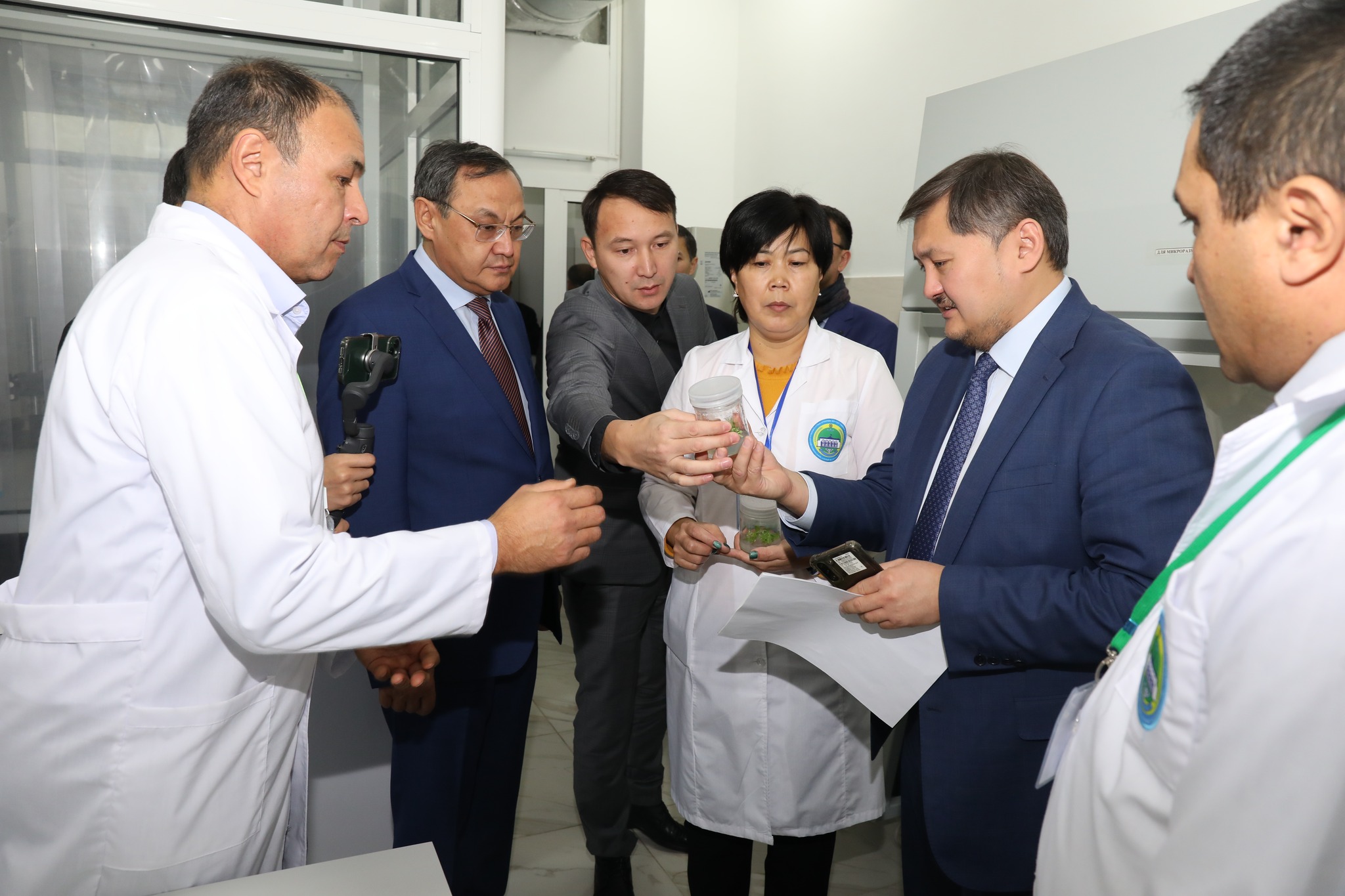
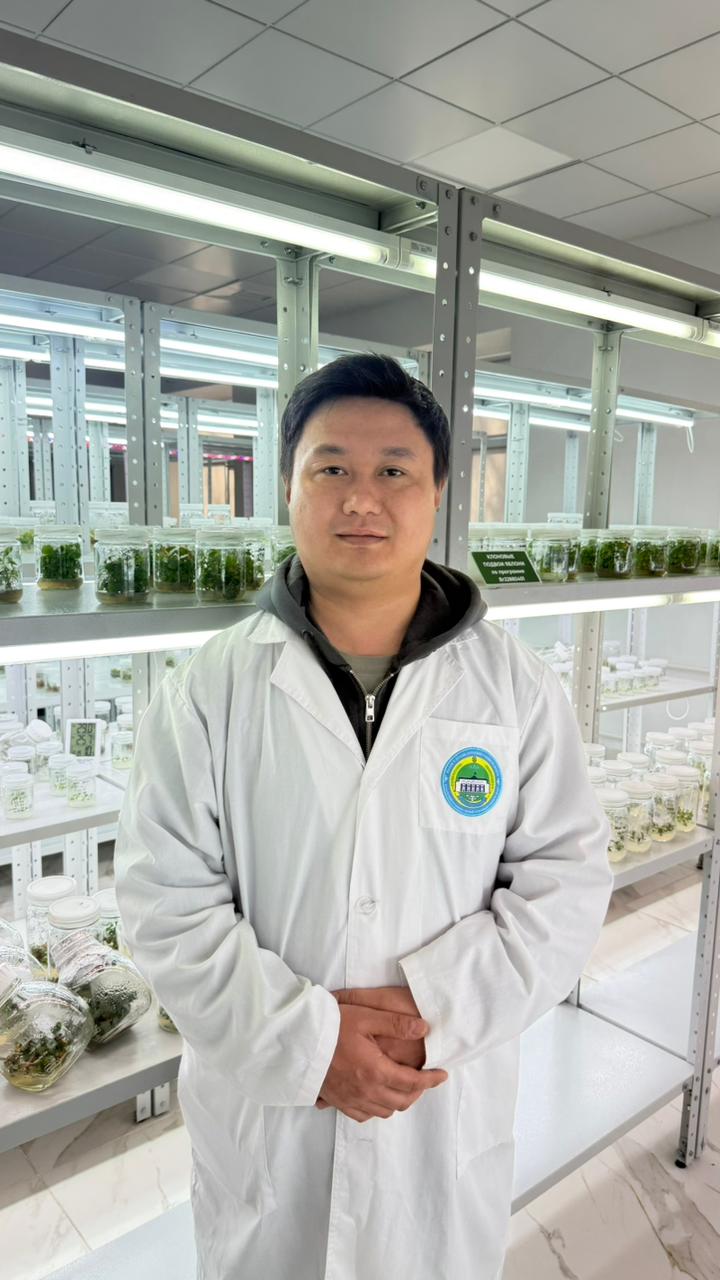
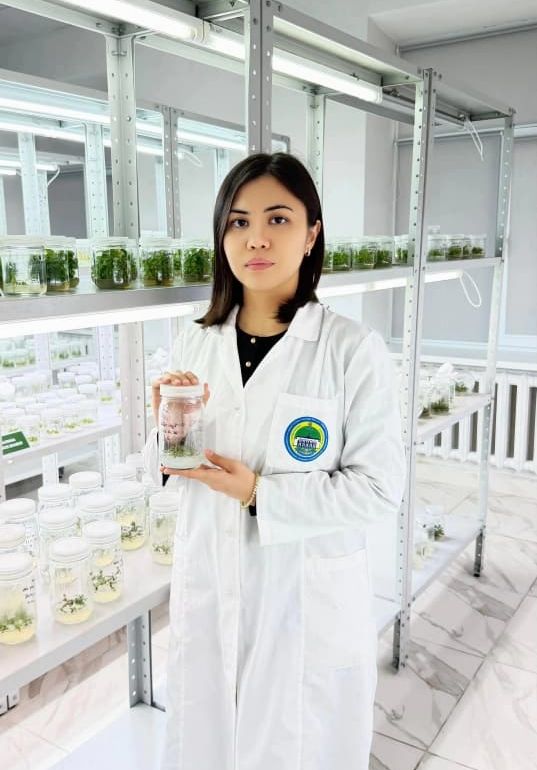
The Center specializes in rapidly obtaining large quantities of certified planting material of fruit, berry, forest, vegetable, and other agricultural crops; training specialists in modern biotechnological methods for obtaining source material and professional diagnostics of plant pathogens; conducting scientific research using current achievements in biotechnology, genetics, and plant physiology. The Center is equipped with modern facilities and highly qualified personnel. The infrastructure and technical resources allow conducting research on cryoconservation of plant samples and collections, performing the full range of clonal micropropagation of plants, including in vitro introduction of plants, diagnostics of vegetable and fruit and berry crops for diseases using enzyme-linked immunosorbent assay (ELISA), PCR, and real-time PCR methods, sanitation of planting material, propagation and in vivo adaptation.
Goals and objectives
Goal:
The goal is the creation of collections, sanitation and in vitro propagation, study, maintenance, and restoration of plant biodiversity.
Objectives:
- Training specialists in biotechnology, plant breeding, and molecular biology.
- Conducting scientific research in bioengineering, plant breeding, and conservation of biological resources with involvement of foreign experts.
- Transfer and implementation of innovative technologies and developments, and support of agricultural crop export.
- Meeting the needs of agricultural producers in certified planting material of fruit and berry, forest, vegetable, and other agricultural crops.
Employees
Leading Researcher
PhD in Plant Protection and Quarantine
Services
Center Capabilities
- Production of 5,000 virus-free plants in test tubes per year.
- Preparation of scientific works and conducting classes in the laboratory by students of the educational programs “Agronomy,” “Bioinformatics,” and “Horticulture (Fruit and Vegetable Growing).”
- Implementation of measures for sanitation of planting material of fruit, berry, and vegetable crops from viral, bacterial, and fungal diseases.
- Propagation of virus-free planting material of fruit crops (apple, pear), stone fruit crops (cherry, sweet cherry, plum, apricot), berry crops (raspberry, strawberry, currant, blueberry), citrus crops (lemon), vegetable crops (potato), as well as forest crops (turanga, poplar, paulownia, etc.).
- Training of specialists in modern biotechnological methods, including the method of plant microclonal propagation.
List of Services
- Detection of viral diseases in vegetable and fruit and berry crops.
- Sanitation of planting material of vegetable and fruit and berry crops.
- In vitro propagation of planting material of vegetable and fruit and berry crops.
- Adaptation of planting material of vegetable and fruit and berry crops (container culture) obtained in vitro.
- Development of systems for sanitation and propagation of valuable varieties of any vegetable and fruit and berry crops.
- Preservation of plant collections.
- Restoration of plant collections that have lost germination capacity.
Innovative projects
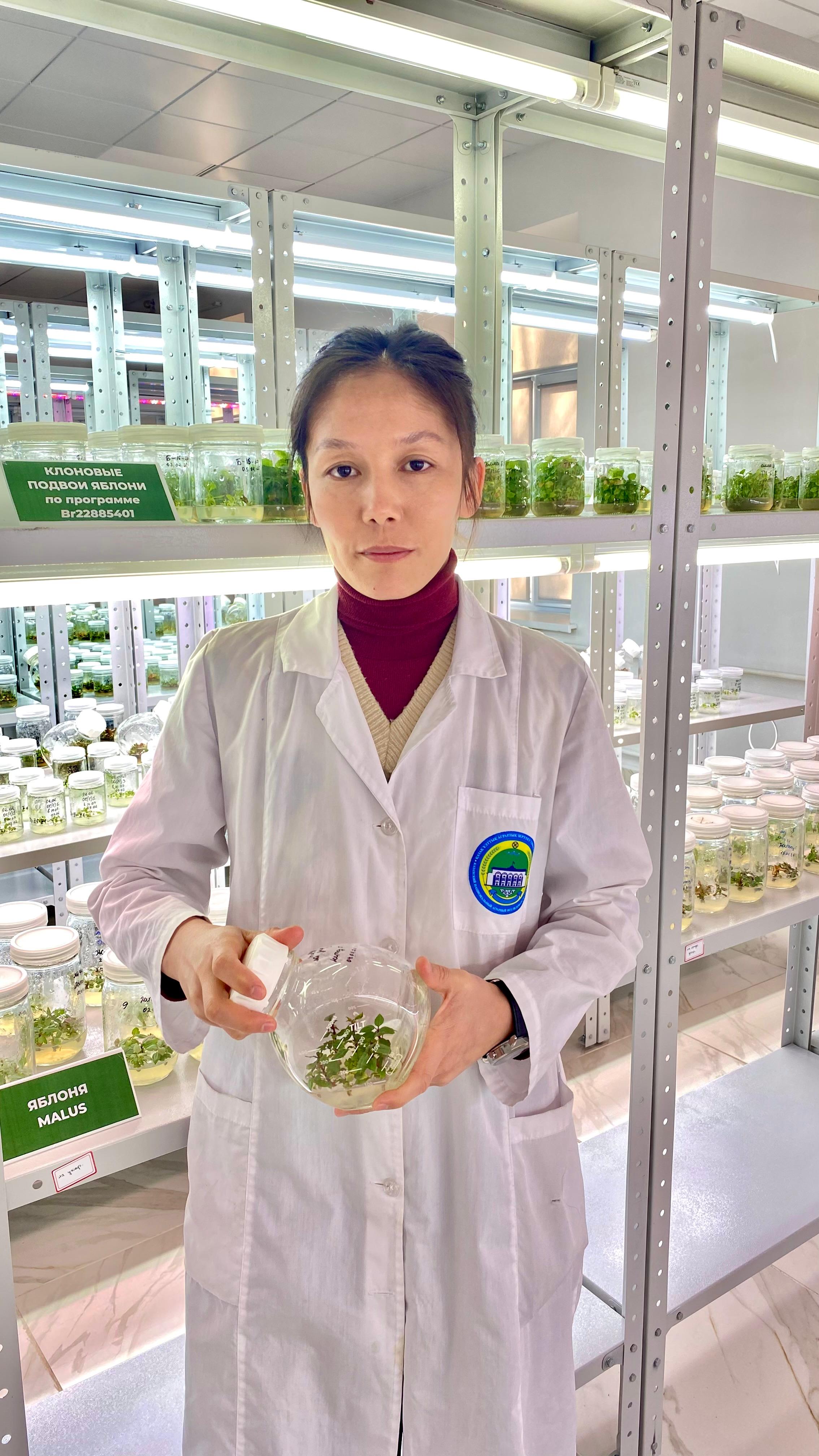
- Co-execution of project BR 22885401 “Propagation and preservation of the original virus-free pre-basic stock of valuable apple varieties and rootstocks” under the program: “Creation of a scientifically grounded system for virus-free nursery management in Kazakhstan.”
Objectives:
- Development of genotype-specific methods for sanitation of apple varieties and rootstocks from viral diseases.
- Clonal micropropagation and adaptation of virus-free apple plants.
- Development of genotype-specific methods and conditions for apple genotypes. At least one scientific article will be published in peer-reviewed journals recommended by the Committee for Quality Assurance in Science and Higher Education of the Ministry of the Republic of Kazakhstan.
- Commercialization project “Organization of production of elite planting material of commercially valuable raspberry varieties” (No. DP23691952)
Objectives:
- Selection and diagnostics of raspberry varieties for viral infections.
- Introduction of selected virus-free samples into in vitro culture to obtain aseptic plants and rhizomes.
- Transfer of rooted in vitro plants to soil substrate followed by adaptation to greenhouse conditions.
- Adaptation of planting material to open-field conditions and growing of raspberries in a nursery, with the planned sale of 2,000 certified raspberry planting materials.
- “Zhas Galym” project No. 85 ZhG-25-27 IRN AP25795665 “Obtaining highly productive forms of Taraxacum kok-saghyz Rodin with large roots and high natural rubber content through selection from tetraploid lines” (Supervisor – Bari G.T.)
Goal:
Selection of plants with large roots and high content and quality of natural rubber from tetraploid lines of kok-saghyz.
Objectives:
- Seeds of tetraploid lines will be sown, and early-maturing individual plants with large roots and high natural rubber content will be selected. The selected highly productive forms will then be propagated vegetatively by root cuttings. Individual plants will be obtained from propagated samples, and seeds will be collected.
- Quantitative PCR analysis of the relative expression level of genes involved in natural rubber synthesis will be carried out using selected tetraploid samples and control diploid plants of kok-saghyz.
- Re-cultivation of selected highly productive tetraploid forms under field conditions will be carried out for final comparative biometric analyses and assessment of natural rubber content and quality.
Laboratory structure
Water treatment unit
Nutrient Media Preparation Unit
IFA block
Laminar flow unit
Cryobank
PCR unit
Technical equipment
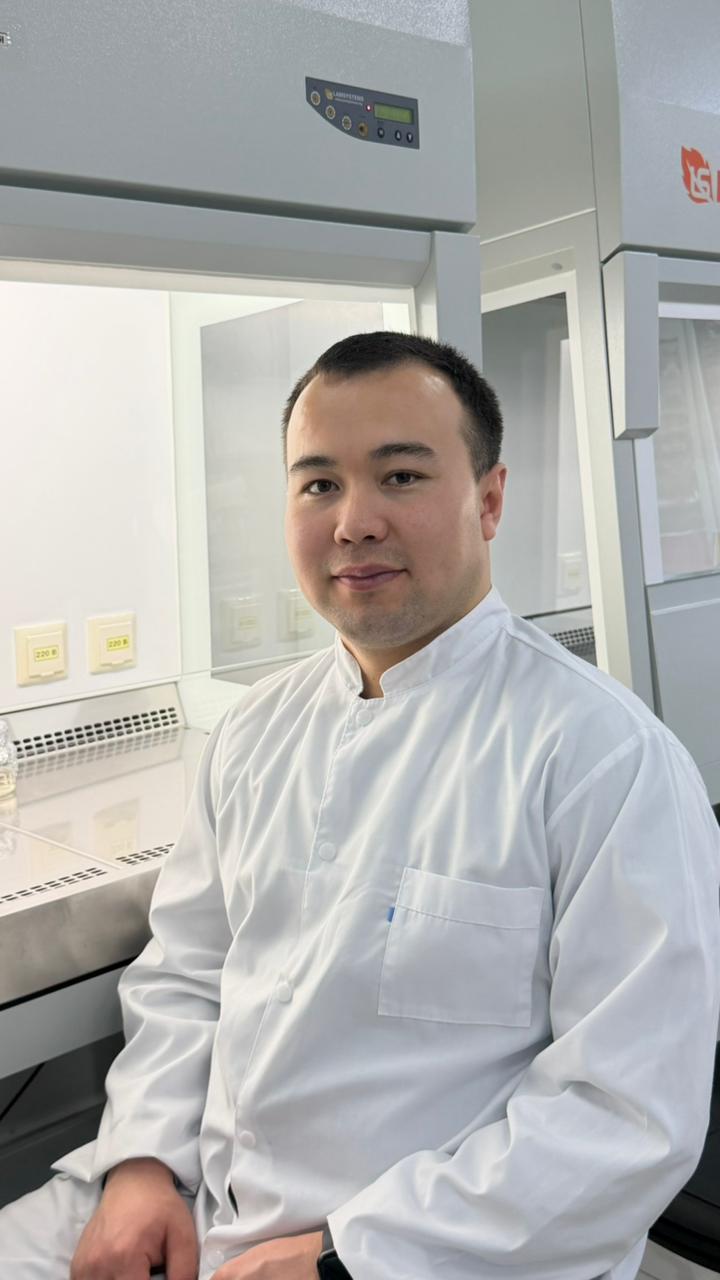
Laminar-boxes of I and II level, Rotor Gene Q real time amplifier, MRC UTKBS-150LV autoclave, dry-frying cabinets
Daihan SOF-W105, GFL distillers and bidistillators, Evoqua UVUF TM dionizer, Millipore DURAN GROUP, magnetic stirrers Heidolph MR Hei-Standard, Daihan SHO-1Di shaker incubator, Panasonic MPR-715F refrigerators, Panasonic MDF-MU549DH-PE and MPR-514R-PE freezers, Daihan HHP400 climate chambers, BertHold LB920 ZOOM HT HS4m immune enzyme analyzer, BertHold Stat FAX 4300 flushing mixer, Mshot MF52N inverted microscope, Cleaver scientific Omni Doc pro geldoc system, Ohaus FC5718 and Hettich MIKRO 200R centrifuges, Shimadzu UV-1900 spectrophotometer, Agilent 2100 bioanalyzer.
Plans and reports
Projects have been submitted to the competition for the GF on scientific and scientific-technical projects for 2023-2025 by the EOM of the Republic of Kazakhstan:
AP19676378 Development of methods for obtaining elite planting material of seed crops based on the study of viral diseases using biotechnology methods. Hands. Madenova A.K. Requested financing 98556,5 thousand tenge.
AP19679681 Creation of highly productive, pathogen-resistant tetraploid pumpkin rootstocks with evaluation of rootstock-graft combinations with cucumber and melon. Hands. Dzhantasov S.K. The requested financing is 92982.3 thousand tenge.
On the commercialization of the results of scientific and (or) scientific and technical activities, pitches were prepared and presented for representatives of the Science Foundation on 2 topics, for further participation in the competition for grant financing of projects for the commercialization of scientific results (RNNTD):
"Plantation afforestation "POPULUS"" R&D No. 0195RK00469 in NCGNTE. purpose: Production of poplar planting material for industrial cultivation and landscaping, from 100 thousand to 600 thousand pieces annually. The planned amount is 300 million tenge.
"Production of virus-free planting material of elite raspberry varieties" Research AR 05131764 RNNTD 22RK0021 purpose: Production of planting material with a closed root system of elite raspberry varieties, 300,000 plants annually. The planned amount is 300 million tenge.
Progress
The number of publications for 2021-2022 in scientific journals is only 30 articles, including:
1. Articles of KKSON - 4 (2021) and 12 (2022) – a total of 16;
2. In the Scopus database - 5 (2021) and 2 (2022) – a total of 7 (including 2 - Q1 and 1- Q2);
3. Patents of the Republic of Kazakhstan – 4 (2021) and 2 (2022) – a total of 6.
4. The Hirsch index is 4 employees, the total value of the Hirsch index is 10.
A cooperation agreement has been signed with NETSKI GmbH, Germany on the international project "Sustainable regional management and creation of added value for the preservation of ancient apple varieties in Kazakhstan and Kyrgyzstan "ALMA". The project has been approved by the German Federal Environment Fund (OV11). The Kazakh-German Institute for the Support of Biological Resources for Biodiversity Conservation has been opened on the basis of the laboratory.
Internships
1. Kaldybayeva D., MNS. Master's degree, October 1 - 31, 2022, within the framework of the grant project AP14869380 "Development of technology for obtaining high-quality planting material of stone crops, cured of major viral diseases using a complex of methods of nursery breeding and biotechnology", she completed an internship in the direction of "Identification of fungal diseases of plants using molecular methods" at the University of Pamukkale, Department of Biology, Faculty of Science, Turkey. Dr. Rafika Jayda Beram Cafe.
2. Madenova A.K., SNC, PhD, December 04-09, 2022. within the framework of the grant project AP14869380 "Development of technology for obtaining high-quality planting material of stone crops, cured of major viral diseases using a complex of methods of nursery breeding and biotechnology" visited the University of Erciyes, Kayseri, Turkey to familiarize themselves with the work and exchange of experience on molecular identification of viral diseases of stone crops. The work was carried out with the project collaborator Dr. Aydin Uzun and the staff of the Department of Fruit and Vegetable Growing. We got acquainted with the selection works of the department; molecular research of the Laboratory of biotechnology. We visited collection and breeding gardens of wild apricot. The issues of methods of improving plants from viral diseases were discussed. Visited the genome laboratory Genome and Stem Cell Center and got acquainted with the works of Dr. Kahraman Gyurkan. We visited the laboratory of clonal micro-propagation of plants. We got acquainted with the activities of the department; primers were obtained; a further collaboration plan was drawn up within the framework of the project. Participated in the seminar of Dr. Uzun on molecular methods in the selection of fruit and vegetable crops at Istanbul University, Istanbul.
3. Irkitbay Azhargul, international scholarship "Bolashak", specialty "Protection and quarantine of plants. Fruit and vegetable farming" Code: 51T. term: 12 months (01.05.2023 – 30.04.2024), subject: Scab (Venturia inaequalis), bacterial burn (Erwinia amylovora) and diseases of summer apple trees. Internship country: USA, host country: University of Illinois, Urbana-Champaign. Department of Plant Science, Professor Mohammad Babadoost.
Work is being carried out in the laboratory:
Genotypes of poplar, apple, raspberry, pear, lavender, strawberry, grape, black currant, blackberry, kiwi are introduced into culture in vitro. Propagate in vitro: genotypes of poplar, turanga, apple, raspberry, pear, lavender, strawberry, grape, black and red currant, blackberry.
Work has begun to identify resistant apple samples to scab and powdery mildew. Sampling was carried out, strains of fungal diseases were isolated with their identification.